
Sometimes it truly is who you know that opens doors to possibilities.
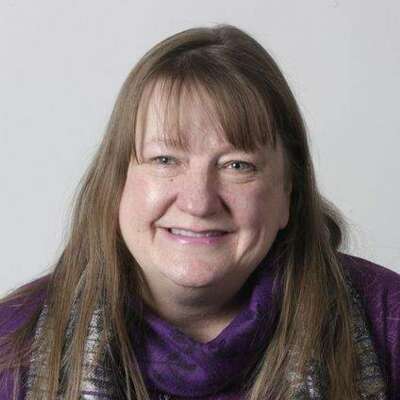
In photographer Linda MacCannell’s case, it was having a colleague and friend who had participated in a significant episode in Canada’s history. That friendship led to four years of adventures in the country’s remote MacKenzie River Valley.
The results of those adventures are now on display at the Center of Southwest Studies at Fort Lewis College in an exhibit called “Thunder in Our Voices.”
MacKenzie Valley pipeline inquiry
In 1968, oil was discovered at Prudhoe Bay, Alaska, and the oil industry began to look for the most direct route to transport natural gas via pipeline to Alberta, Canada, and on down to the Lower 48, said Drew Ann Wakefield, MacCannell’s colleague, who was a young freelance reporter covering the inquiry. The route would take the pipeline through vast undeveloped areas where Dene, Inuvialuit, Métis and white settlers lived off the land.
Justice Tom Berger was appointed to oversee the inquiry, and after hearing from industry and government scientists and social scientists, he wanted to hear from the people who actually lived in the areas that would be affected. And since it was difficult, if not impossible, for most of them to come to Yellowknife, where he had held the earlier testimony, Berger went to them, traveling to more than 35 villages, many of them fly-in only, and interviewing more than 900 people.
The end result was a report calling for a moratorium on the pipeline, considered the first time that indigenous people’s voices had prevailed over a major company’s proposal.
The return
In 2009, Wakefield, whose recordings of the testimony are the only ones that had survived the intervening four decades, and MacCannell set off to retrace some of Berger’s travels.
“We wanted to see how the story has ended, were they happy?” MacCannell said. “We took some old newsreel footage and Drew Ann’s audio recordings. I remember being in a little village called Nahanni Butte, where we met at this little log school. We didn’t know if anybody cared, but Drew Ann took out her computer to play recordings, and suddenly people started to come from every direction.”
Many of the younger generation didn’t know much about the Berger inquiry, she said.
“We had maybe 25 images (most taken by Michael Jackson, a young attorney who assisted Berger), and they would look, look and relook,” MacCannell said. “One woman saw a sleeve in a photo and said, ‘That’s my husband.’”
As long as they were there, the two women, both longtime teachers, gave some classes, MacCannell teaching photography, Wakefield how to record, conduct a news conference and be written reporters.
“By the end of the classes, they would be interviewing the elders of the community,” MacCannell said, “videotaping them. It was probably one of the most fun teaching experiences I’ve ever had.”
A lifetime in photography
MacCannell’s connection to Durango goes back decades. Her father, Frank Mapel, bought Durango Coca-Cola in 1960, and Don, her brother, and niece, Meredith, continue to run the company. She lives part-time in Durango and part-time in Calgary.
MacCannell has been serious about photography since she was in her late teens. Early in their marriage, her husband, Keith, built her a small darkroom.
“I had to use the baby’s bathtub to wash prints when it didn’t have running water,” she said. “Luckily, it was right next to the nursery, so I could hear them. Nap time was very productive for me.”
Having majored in science, MacCannell began taking art classes, eventually earning a master’s degree in photography and teaching at the Alberta College of Art and Design and the University of Calgary.
A previous project, Riders of the West: Portraits from Indian Rodeo, was published in 1999 and the subject of an exhibit at Open Shutter Gallery a few years ago. Riders required traveling in the opposite direction, she said, up and down the spine of the Rocky Mountains.
“And Drew Ann and I had worked on other projects before, which helped on the Berger project,” MacCannell said. “We created Leonardo (da Vinci) in a crate as a traveling educational tool.”
This story has been updated with the correct spelling of the MacKenzie River.
Reader Comments