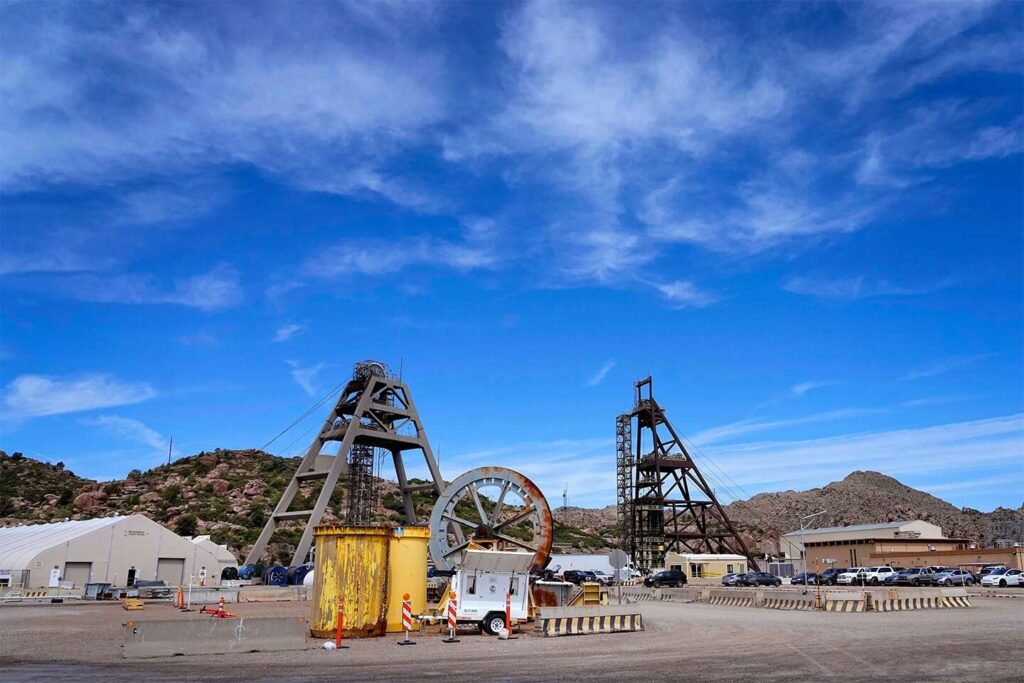
Over the past year, Congress has increasingly turned to a previously obscure legislative tool called the Congressional Review Act in order to get rid of protective land management decisions. Champions of extractive uses have specifically targeted iconic landscapes, including the Boundary Waters in Minnesota and the Arctic wilderness in Alaska. Now, their sights are focused on the Grand Staircase-Escalante National Monument in Southern Utah.
The Congressional Review Act was first adopted in 1996, and rarely used until the past few years. Congress is applying it to override decisions made in land management plans by the Forest Service and Bureau of Land Management. The CRA has been aggressively applied by House Republicans to target management plans that limit mining, oil and gas development, roads and other forms of development.
One of the most concerning applications has been to reverse a ban on mining adjacent to the Boundary Waters Canoe Area Wilderness in northern Minnesota. The Boundary Waters is America’s most popular wilderness area, visited by a quarter-million people every year hoping to enjoy its pristine waters for canoeing, fishing, swimming and camping.
However, a Chilean mining company, Antofagasta, has proposed an enormous copper-nickel mine in sulfide-bearing ores immediately outside, and upstream, of the Boundary Waters. As we well know from the experience of mining sulfide-bearing formations in the Animas River headwaters, this type of mining inevitably leads to acid-mine runoff. What could pose a greater threat to the pristine lakes for which the Boundary Waters is renowned?
In response to this threat posed to the Boundary Waters, the Forest Service undertook a yearslong environmental review beginning in 2017, hosting numerous public meetings and receiving over 200,000 public comments and, in 2023, enacted a 20-year moratorium on mining.
In contrast, the House of Representatives spent just nine days considering whether to overturn this massive outpouring of public sentiment and voted in January to pave the way for the Chilean miners. The Senate has yet to take action but could at any time.
Unfortunately, our Congressman, Rep. Jeff Hurd, has been an avid supporter of these Congressional overrides of public involvement and environmental review. Our two Senators, Sens. Michael Bennet and John Hickenlooper, have uniformly opposed this heavy-handed approach.
While the Boundary Waters decision is still pending in the Senate, Congress last fall passed a law eliminating protections for the Western Arctic in Alaska. Among these protections was a decision that prohibited a new 200-mile road through Gates of the Arctic National Park for the benefit of a Canadian mining company, one intending to also construct a copper in some of America’s most dramatic wilderness and wildlife habitat.
Representatives from Utah recently introduced their own resolution to get rid of the management plan for Grand Staircase-Escalante National Monument, the first time Congress would ever wipe out a National Monument management plan. Grand Staircase-Escalante is beloved by many across Southwest Colorado, notable for its breathtaking scenery, remoteness and scientific values. Utah officials, who have long opposed protection of Grand Staircase-Escalante, would eliminate the management plan and its limitations on unmanaged motorized recreation, chaining of pinyon-juniper woodlands and resource extraction. The House of Representatives could take up action at any time.
Constituents still have time to weigh in with elected officials. The Conservation Lands Foundation, headquartered in Durango, has information available for taking action, including encouraging Rep. Hurd to keep intact protection of Grand Staircase-Escalante (www.conservationlands.org/defend-grand-staircase). Constituents can also encourage Sens. Bennet and Hickenlooper to stand firm against efforts attacking the National Monument, the Boundary Waters and other areas.
Mark Pearson is the executive director at San Juan Citizens Alliance. Reach him at [email protected].